
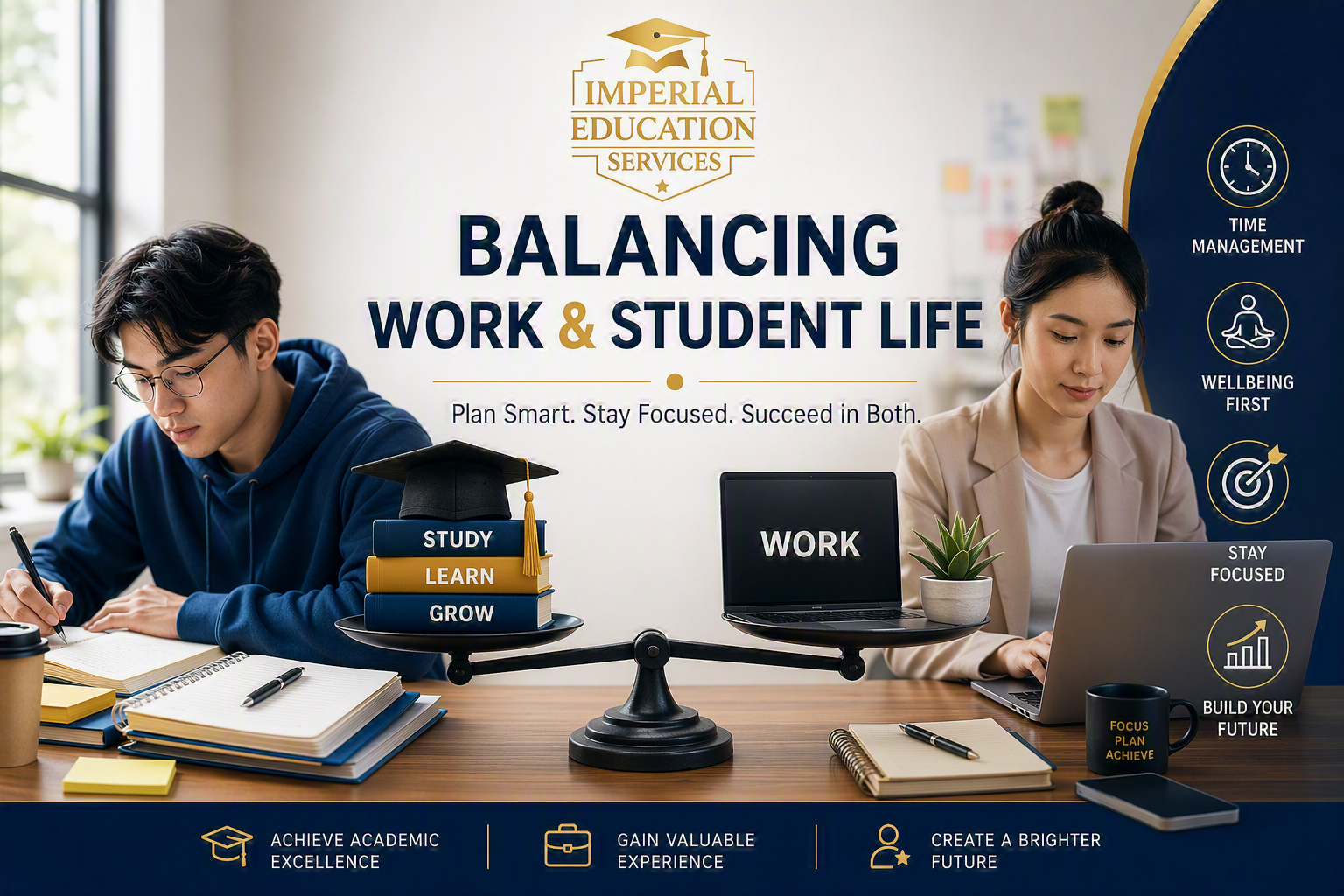
In today’s fast-paced world, many students are no longer confined to academic responsibilities alone. Increasingly, learners take on part-time jobs, internships, or even full-time roles alongside their studies. While this dual commitment can provide financial independence and valuable professional experience, it also presents a significant challenge: maintaining a healthy balance between work and academic life.
At Imperial Education Services, we understand that success is not just about academic achievement—it’s about developing sustainable habits that support long-term personal and professional growth. This guide offers practical, professional insights to help students manage both worlds effectively.
Why Balancing Work and Study Matters
Striking the right balance is crucial for several reasons:
Academic Performance: Overworking can lead to fatigue, reduced concentration, and declining grades.
Mental Wellbeing: Poor balance often results in stress, burnout, and anxiety.
Career Development: Structured work experience can enhance employability—but only when managed wisely.
Key Challenges Students Face
Understanding the hurdles is the first step toward overcoming them:
- Time Constraints – Limited hours in the day make it difficult to juggle lectures, assignments, and work shifts.
- Fatigue and Burnout – Extended working hours combined with academic pressure can lead to exhaustion.
- Lack of Flexibility – Some employers may not fully accommodate academic responsibilities.
- Reduced Social Time – Maintaining friendships and personal activities often becomes difficult.
Recognising these challenges allows students to plan proactively and implement effective solutions.
Strategies for Achieving Balance
1. Master Time Management
Effective time management is the cornerstone of work-study balance.
- Create a weekly schedule that includes classes, work shifts, study time, and rest.
- Use digital tools such as calendars or productivity apps to stay organised.
- Prioritise tasks based on urgency and importance.
Tip: Allocate buffer time between activities to manage unexpected commitments.
2. Set Realistic Commitments
Avoid overloading your schedule.
- Limit working hours to a manageable level.
- Be honest about your academic workload when accepting job offers.
- Choose roles that complement your long-term career goals where possible.
3. Communicate Effectively
Clear communication is essential in maintaining balance.
- Inform your employer about your academic commitments in advance.
- Request flexible shifts during exam periods or assignment deadlines.
- Keep academic advisors informed if your work schedule affects your studies.
4. Prioritise Health and Wellbeing
Your physical and mental health must remain a priority.
- Ensure adequate sleep and maintain a consistent routine.
- Eat well and stay active to sustain energy levels.
- Take regular breaks to avoid burnout.
Remember: Productivity decreases significantly when wellbeing is compromised.
5. Develop Efficient Study Habits
Maximise the effectiveness of your study time.
- Use focused techniques such as the Pomodoro method.
- Study in distraction-free environments.
- Review materials regularly instead of last-minute cramming.
6. Leverage Support Systems
Support can make a significant difference.
- Engage with university support services.
- Seek guidance from mentors or academic advisors.
- Connect with fellow students who are managing similar responsibilities.
At Imperial Education Services, we encourage students to seek help early and build strong support networks.
Turning Work Experience into an Advantage
Balancing work and study is not just about survival—it can be a powerful advantage when approached strategically.
Students who successfully manage both often develop:
- Strong time management skills
- Professional discipline and responsibility
- Enhanced communication skills
- Practical industry experience
These attributes are highly valued by employers and can significantly enhance career prospects after graduation.
Final Thoughts
Balancing work and student life is undoubtedly challenging, but it is also highly achievable with the right mindset and strategies. Success lies in planning ahead, setting realistic goals, and prioritising wellbeing.
At Imperial Education Services, we are committed to supporting students in every aspect of their journey—from academic excellence to personal development. With the right balance, students can not only succeed academically but also build a strong foundation for future careers.
Need personalised support?
Contact Imperial Education Services today to explore how we can help you achieve your academic and professional goals with confidence.
Leave a Reply